Historical Mining Towns
As new mines opened and workers were needed, new towns and communities formed across Utah. These mining towns became home to families, businesses, and schools. Each town has its own story about the people who lived and worked there. Now you can explore a map to visit some of these places and see what life was like in the past.
Map the Mines
Click on the map to visit different mining towns like Helper, Eureka, Park City, Moab, Silver Reef, and Cedar City. Each stop will take you to a virtual site where you can see photos, read short stories, or watch a video. Keep exploring the map to discover what made each town unique!
This is an interactive map. Use Tab to navigate between clickable regions. Press Enter or Space to select a region and reveal its content. The content will appear below the map. Only one region can be open at a time.


Helper
Helper got its name because trains needed extra engines (called ‘helpers’) to climb the steep hill to Soldier Summit. People from many countries came here to work in the coal mines and on the railroad, making Helper a melting pot of cultures.
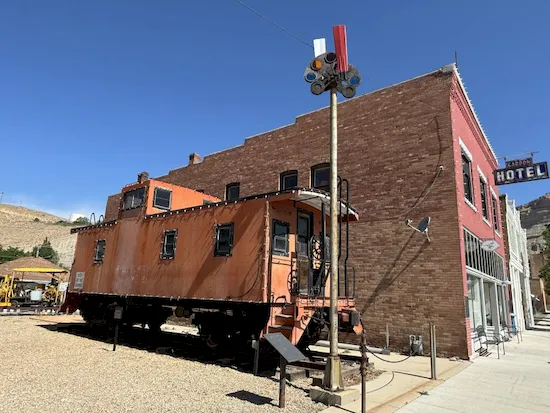
A railroad car outside the historic Carbon Hotel, built in 1915 and currently home to a historical preservation society chapter.
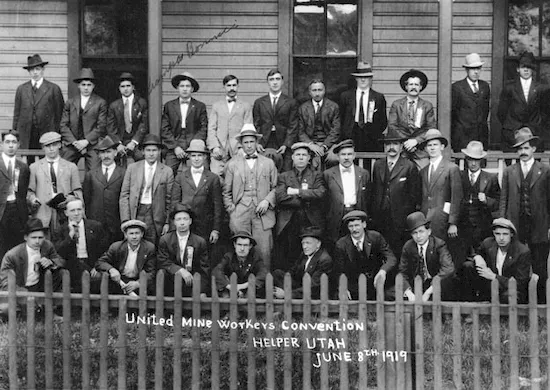
United Mine Workers of America labor union convention in Helper, June 8, 1919.
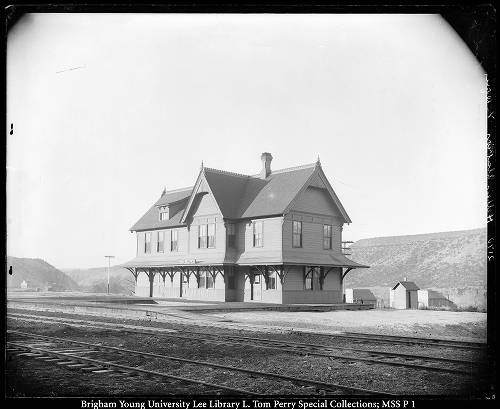
Helper railroad station. Photo probably taken 1884-1907.
Eureka
Eureka was once a booming silver mining town with more than 5,000 people! Today, it’s much smaller, but you can still visit and see the old mining history.
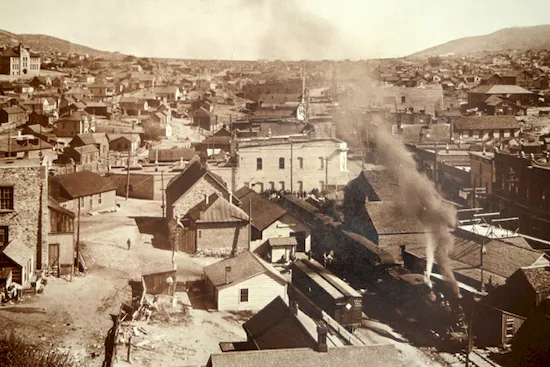
Panoramic view of Eureka, photo probably taken between 1898 and 1924. School is on the hill at upper left.
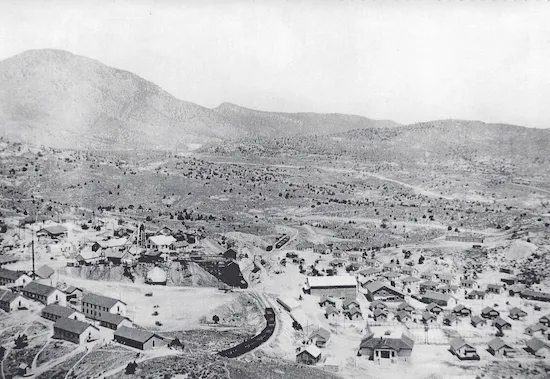
View of Eureka
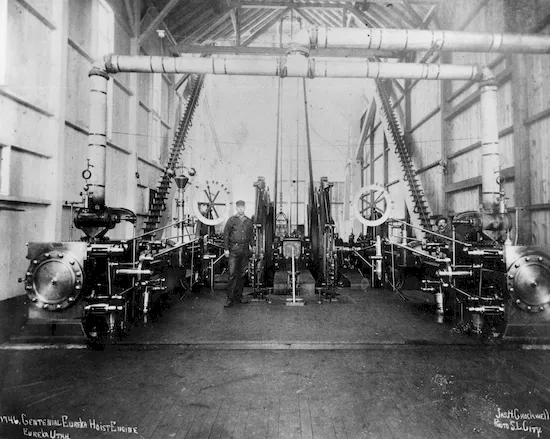
Steam-powered hoist engine at Centennial Eureka Mine, around 1890. Hoists were like early elevators, used to carry miners and equipment into and out of mine shafts.
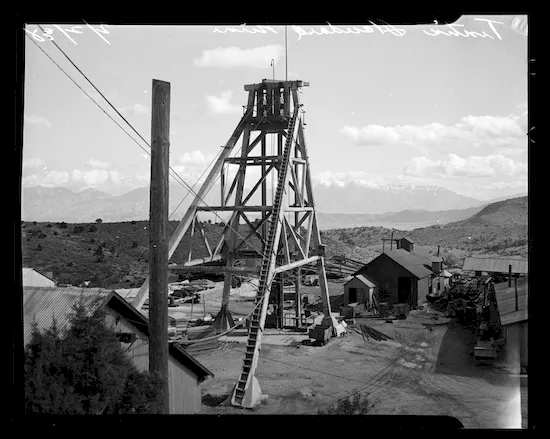
Headframe for hoist at Tintic Standard Mine, February 1938
Park City
Park City started as a silver town in the 1860s. Later, it became famous for skiing — but it all began with mining!

The Silver King Mine in the 1930s. This was the mine that made Utah’s Silver Queen, Susanna Egeria Bransford Emery Holmes Delitch Engalitcheff, rich.
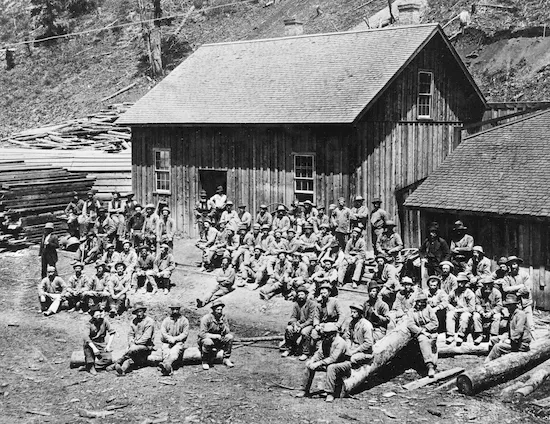
Park City Miners, late 1800s

A mule pulls mine carts near the Ontario Drain Tunnel. The drain tunnel removed water from the Ontario silver mine
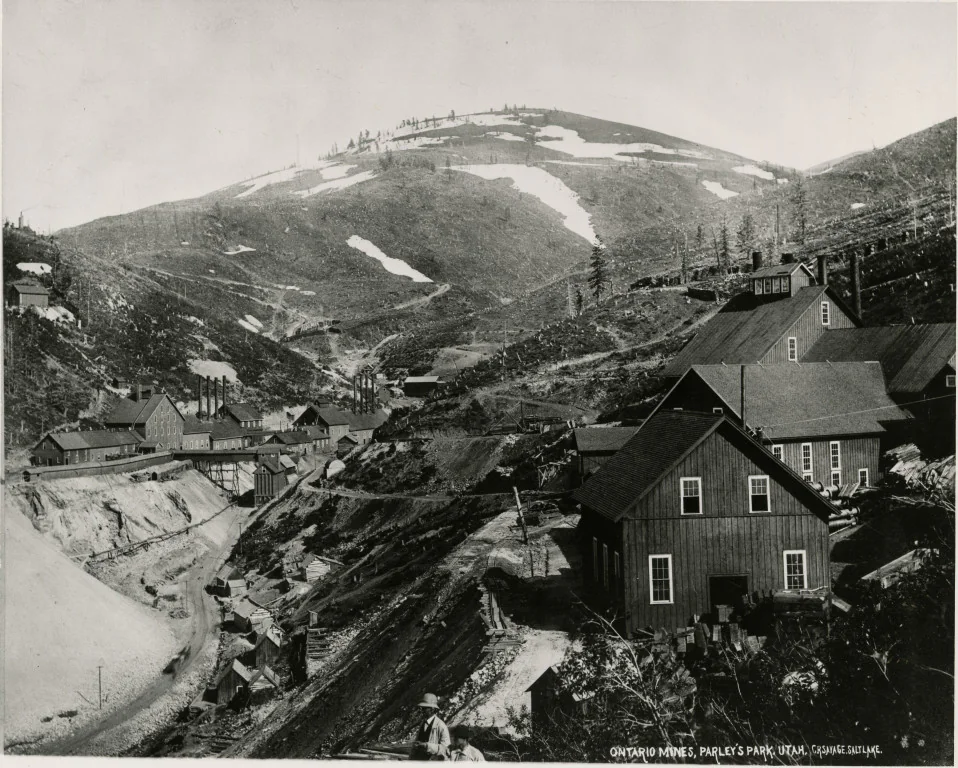
The Ontario silver mine in the late 1800s, taken by well-known photographer Charles R. Savage.
Moab
Moab was a small farming town until the 1950s, when Charlie Steen discovered uranium. Suddenly, people rushed to Moab for mining, and the town grew fast.
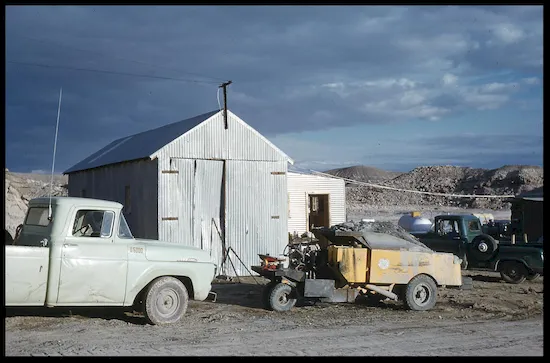
Remodeled buggy outside the workshop at General Minerals Mine, 1960-1961.
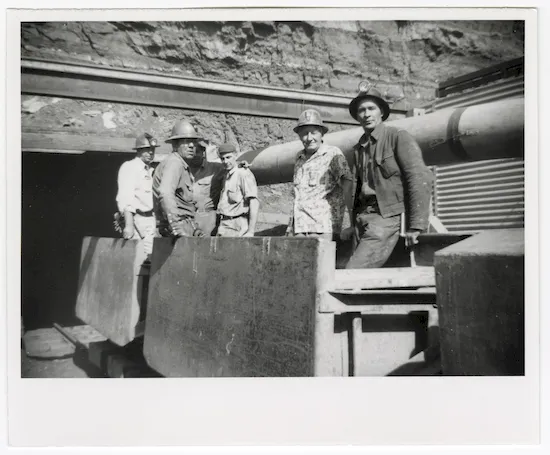
Uranium miners, 1950s
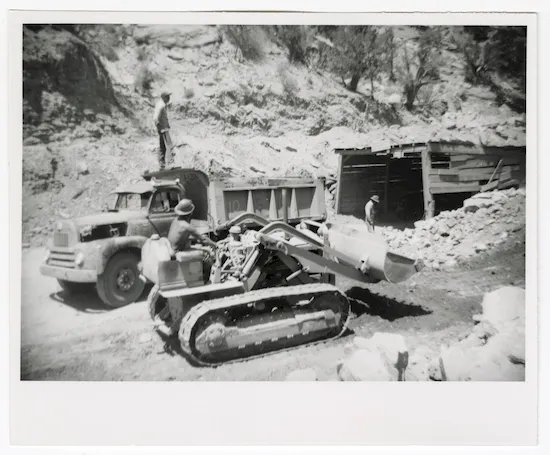
Uranium miners with heavy equipment, 1950s
Silver Reef
Silver Reef is the only place in the world where miners found silver in sandstone instead of hard rock. That made it famous for a little while!
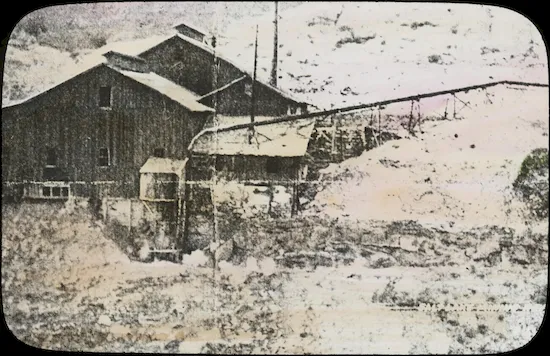
A mill for processing silver ore into bullion, 1880s. Three mills operated in Silver Reef during its short existence.
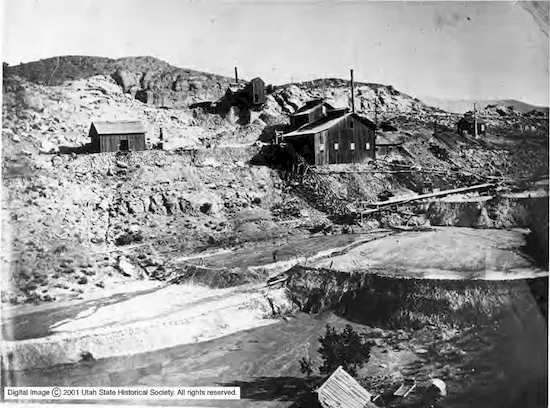
Another mill in Silver Reef, possibly the mill associated with the Barbee & Walker Mine, 1880s.
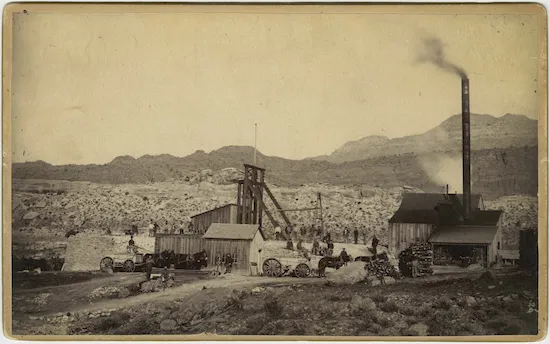
The Buckeye silver mine, around 1885.
Cedar City
Cedar City started in 1851 as a town for iron mining. Early settlers tried to make tools and buildings using local iron ore.
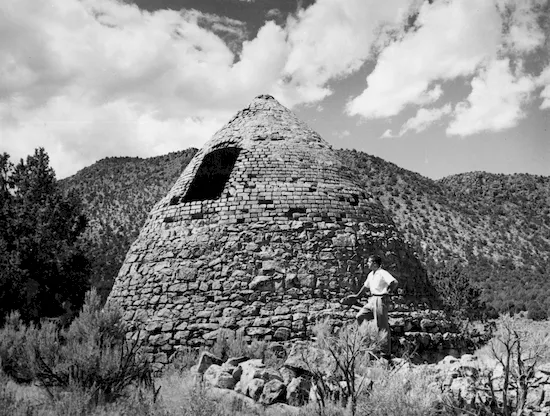
Coke oven at the ghost town of Irontown, west of Cedar City. Irontown was called Iron City during its time as an active ironworks company town from 1868-1876. Coke is heat-treated coal burned in furnaces for making steel.
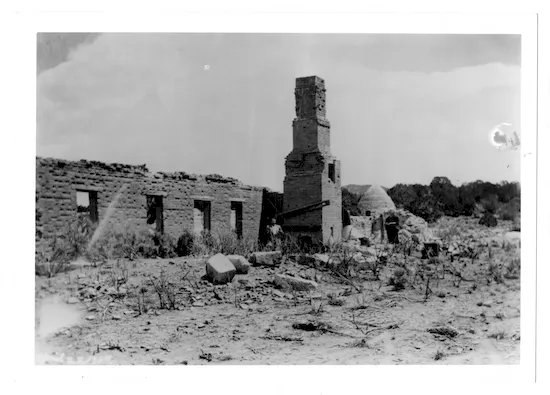
Ruined building at Irontown, photographed in 1950. Many stones from this building were later taken by people who reused them in construction on their own properties.
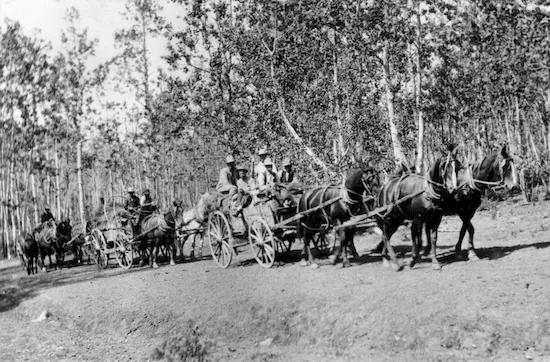
Nat Gardner’s freight wagons, sometime between 1870-1879. Utah merchants sold goods in the mining towns of Nevada.
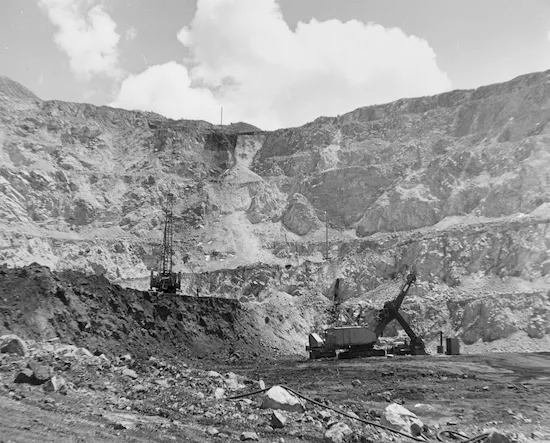
Open pit iron mine at Iron Mountain, mid-20th century. This mine provided iron for U.S. Steel’s Geneva plant at Vineyard.